
Recovery
From Injury to Full Function: Using Peptides in Rehab
A practical guide to incorporating peptides into injury rehabilitation, what the research shows and how to use them alongside physiotherapy.
Injury is one of the most frustrating experiences for any active person. Whether it is a torn ligament, a chronic tendinopathy, or a muscle strain that refuses to heal, the conventional rehabilitation timeline often feels far too long. Peptides are emerging as a powerful adjunct to traditional physiotherapy, not a replacement, but a meaningful accelerant.
The Biology of Injury Repair
Healing from a soft tissue injury occurs in three overlapping phases: the inflammatory phase, the proliferative phase, and the remodeling phase. Each phase involves distinct cellular and molecular events. Peptides can influence all three phases, either by modulating the inflammatory response, accelerating cell proliferation, or improving the quality of the extracellular matrix laid down during remodeling.
BPC-157 in Tendon and Ligament Repair
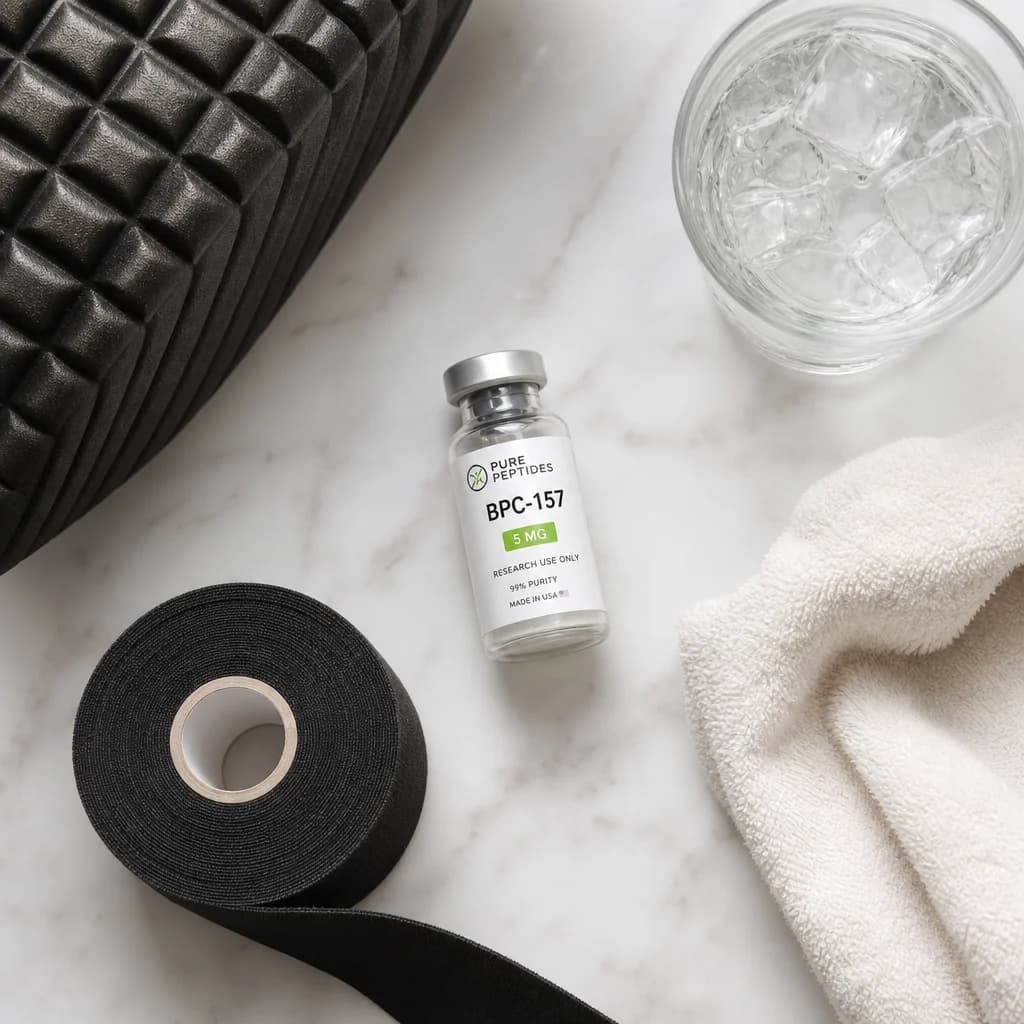
Tendons and ligaments have notoriously poor blood supply, which is why injuries in these tissues heal so slowly. BPC-157 directly addresses this by stimulating angiogenesis, the formation of new capillaries into the damaged tissue. More blood flow means more oxygen, more growth factors, and more cellular building blocks delivered to the injury site. Animal studies consistently show significantly faster tendon repair rates with BPC-157 administration.
Combining Peptides with Physiotherapy
Peptides do not replace the mechanical stimulus of physiotherapy. Loading injured tissue is essential for proper remodeling and return of function. What peptides do is lower the threshold at which loading becomes beneficial, and raise the ceiling of how much productive load the tissue can tolerate at a given point in rehabilitation.
A practical approach: use BPC-157 to accelerate early-phase healing, introduce graduated loading per your physio's guidance from weeks 2 to 4, and layer in TB-500 for systemic anti-inflammatory support if the injury is complex or chronic.
Chronic vs. Acute Injuries
Peptides appear to be particularly effective for chronic injuries, conditions like patellar tendinopathy, rotator cuff tendinosis, or plantar fasciitis that have failed to resolve with conventional treatment. These injuries are often characterized by failed healing and poor tissue quality rather than active inflammation, and BPC-157's ability to drive new vascularization and collagen remodeling makes it well-suited to breaking this cycle.
Key Takeaways
- Peptides work alongside physiotherapy, not instead of it
- BPC-157 improves blood supply to poorly-vascularized tissues like tendons
- TB-500 provides systemic anti-inflammatory and regenerative support
- Chronic injuries that have failed conventional treatment may respond particularly well
- Always consult a qualified healthcare professional before starting any peptide protocol