
Recovery
The Peptide Recovery Protocol: Heal Faster, Train Harder
How targeted peptides are transforming recovery for athletes and active individuals: less downtime, better adaptation, and stronger tissue.
Recovery is where progress is actually made. You do not grow stronger during a workout. You grow stronger during the hours and days after it, when your body repairs and rebuilds damaged tissue. Peptides that specifically target this window can dramatically accelerate the adaptation process.
Why Recovery Is the Limiting Factor
For most serious athletes, the bottleneck is not training capacity. It is recovery capacity. You can tolerate far more training volume than your body can repair in a given time window. The athletes who progress fastest are those who recover fastest between sessions, allowing for greater cumulative training load over weeks and months.
BPC-157: The Foundation of Any Recovery Protocol
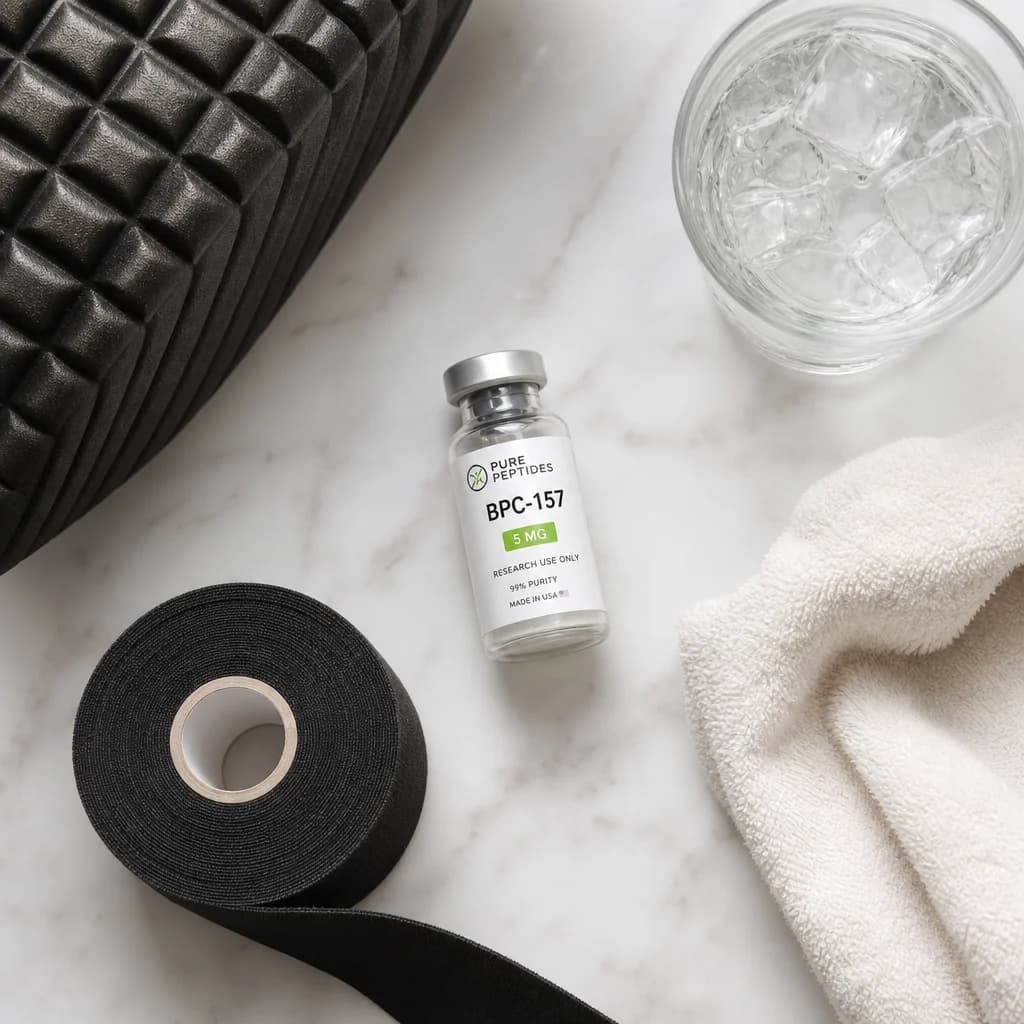
BPC-157 (Body Protection Compound-157) is the most researched recovery peptide available. It accelerates healing of tendons, ligaments, and muscle tissue by promoting angiogenesis and upregulating growth hormone receptors in fibroblasts. Studies consistently show significantly faster tissue repair rates in subjects administered BPC-157 compared to controls.
It also has notable anti-inflammatory properties, reducing pro-inflammatory cytokine levels without the gut-damaging side effects of conventional NSAIDs, making it a safer long-term option for managing training-related inflammation.
TB-500 (Thymosin Beta-4): Systemic Tissue Repair
While BPC-157 excels at localized healing, TB-500 operates more systemically. It promotes cell migration and differentiation, modulates inflammation, and supports the repair of muscle, tendon, and cardiac tissue. The combination of BPC-157 and TB-500 is among the most potent recovery stacks in current research.
Ipamorelin for Sleep-Phase Recovery
Growth hormone is the body's primary overnight repair signal and the majority of it is released during deep sleep. Ipamorelin, a selective growth hormone secretagogue, amplifies this natural GH pulse without the cortisol or prolactin elevations seen with older peptides. Dosing Ipamorelin before sleep can significantly enhance the quality of overnight tissue repair and cellular regeneration.
Supporting Your Protocol with the Right Habits
Peptides work within your biology, not around it. To maximize recovery outcomes, pair your protocol with adequate protein intake of 1.6 to 2.2g per kg of bodyweight, 7 to 9 hours of quality sleep, contrast therapy using heat and cold exposure, and strategic deload weeks to allow full systemic recovery.
Key Takeaways
- Recovery capacity, not training capacity, is the real limiting factor for progress
- BPC-157 accelerates localized tissue repair and reduces inflammation
- TB-500 supports systemic tissue healing and cell regeneration
- Ipamorelin enhances the natural GH pulse during deep sleep
- Peptides work best when supported by good nutrition, sleep, and deload periods